
Evaluate Digital Marketing Agency SEO Without Guesswork
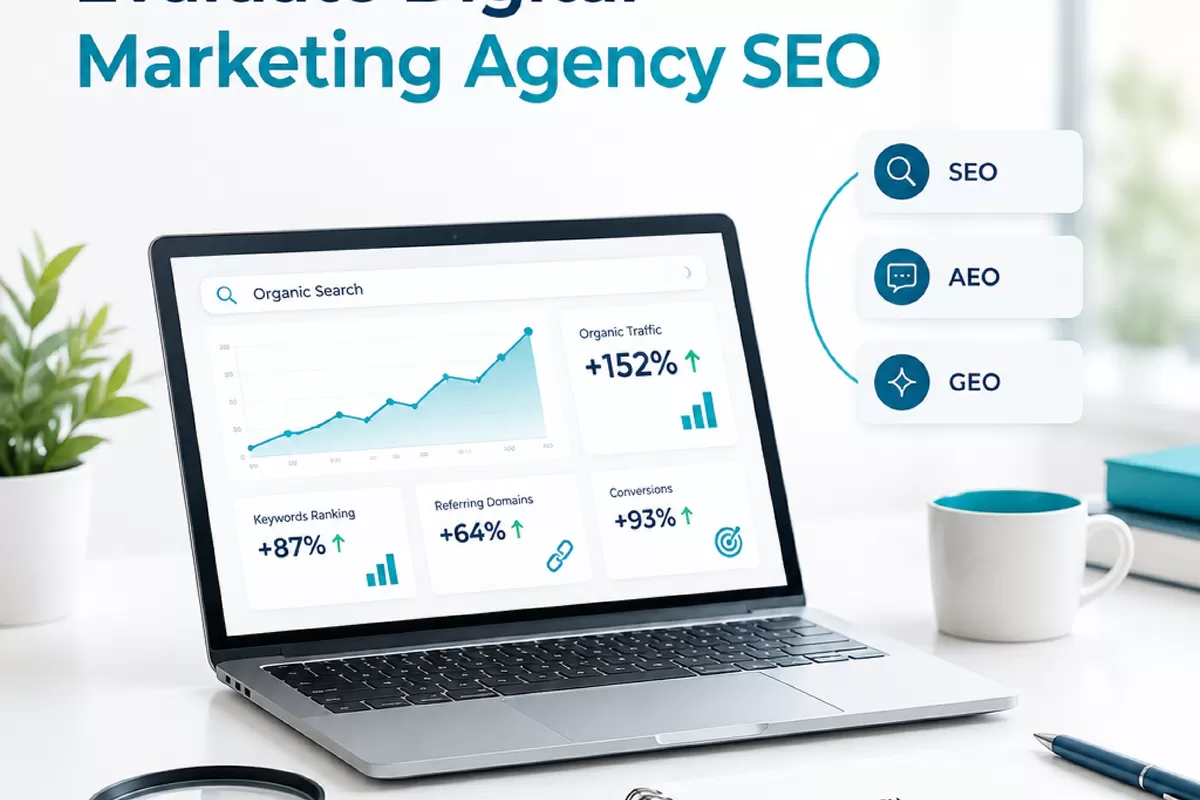 Choosing an SEO partner is difficult when a plan promises growth but does not explain the work behind it. For businesses in the United States, a useful digital marketing agency SEO plan should connect specific goals to technical fixes, relevant content, local visibility where needed, and clear progress reports. It should also make room for how people find answers through search results, maps, and AI-generated responses.
You do not need to predict every ranking change to judge a proposal. You do need enough detail to see what the agency will do, why it matters to your business, and how you will know whether the work is moving in the right direction. Use these checks before you agree to a scope.
Check that the goals and scope match your needs
Start with the business outcome, not a list of SEO activities. A plan may aim to grow qualified organic visits, improve visibility for high-value services, or attract more local inquiries. Those goals are not interchangeable. Ask the agency to explain which audience and pages the work is meant to reach, and how that work connects to your sales process.
Then check whether the proposed scope supports those goals. If the priority is qualified leads, a plan focused mainly on broad traffic growth may miss the point. If key service pages are not being found or indexed, publishing a large volume of new articles may not be the first useful step. The proposal should identify its starting assumptions, planned work, and any dependencies, such as access to the site or input from your team.
For example, a business with several service lines might need a clearer site structure and stronger service pages before expanding its content. Ask what the agency would examine first, what it expects to change, and what falls outside the engagement. A specific answer is more useful than a promise to “improve SEO.”
To compare the proposed scope with an integrated offering, review digital marketing agency seo. The service overview describes SEO alongside AEO and GEO, technical fixes, local visibility, and content that ranks. Use those categories as prompts for questions, not as a substitute for confirming which tasks are included in your own plan.
Evaluate technical work and local visibility in the United States
A credible plan should explain how the agency will find and prioritize technical issues. Technical SEO covers site conditions that can affect crawling, indexing, and the experience of using a page. Ask whether the initial review will check for problems such as pages that search engines cannot access, duplicate or poorly organized pages, slow templates, and broken internal links. The agency should show how it will rank fixes by impact and effort, rather than treating every audit finding as equally urgent.
Also clarify who will make the changes. Some agencies implement fixes; others provide recommendations for your developer or internal team. Either approach can work, but the plan should name the handoff, approval process, and way completed changes will be checked. An audit without a route to implementation can leave important issues unresolved.
For businesses serving customers in the United States, local work should fit the actual service footprint. If a business depends on local discovery, ask how the plan will assess its Google Business Profile, map pack visibility, business name, address, and phone number consistency, and customer reviews. The map pack is the group of local business results shown on Google for some searches. A plan should connect these checks to the places and services the business genuinely serves.
Look closely at local landing pages, too. A page for a city or neighborhood should offer useful, accurate information for customers there, not just swap a place name into a repeated template. Ask how the agency will decide which locations merit pages and how it will avoid thin or duplicated content. For a company without a local customer base, extensive city-page work may not be relevant. The plan should say so rather than forcing a local tactic into every engagement.
Review content, search visibility, and reporting
Content recommendations should identify the reader, purpose, and role of each proposed page. Ask whether the agency has reviewed existing pages before suggesting new ones. Sometimes the better move is to update a useful page, clarify its subject, or connect it more clearly to related pages. A content calendar is only helpful if the topics fit the business, answer real customer questions, and support the goals stated in the plan.
Check how the agency will evaluate content quality. Look for a process that covers search intent (what the person is trying to accomplish), subject accuracy, useful detail, and a clear next step for the reader. Ask who supplies expertise, who reviews drafts, and how updates will be handled. Your team may need to provide product or service knowledge. That is a normal constraint, and a good plan makes the responsibility clear.
SEO, AEO, and GEO can be considered together when they support the same audience and information needs. AEO, or Answer Engine Optimization, focuses on making information useful and easy to interpret in answer-focused search experiences. GEO, or Generative Engine Optimization, considers how content may be understood and referenced in generative search experiences. These terms should not obscure the basics: ask what will actually change on your site, which pages are involved, and how the work relates to traditional search visibility.
Finally, inspect the reporting plan before signing. It should distinguish completed work from outcomes, and show measures that relate to the agreed goals. Depending on the project, useful reporting may cover organic visibility, relevant page performance, technical fixes completed, and local search activity. Ask how often you will review results, who will explain changes, and how the next set of priorities will be chosen. Rankings can move for reasons outside an agency’s control, so be cautious of guarantees or reports that present one position as proof of business impact.
Before deciding, ask the agency to walk through one priority from diagnosis to action and measurement. Confirm the scope, the people responsible, and what happens if a technical dependency or missing content input slows the work. If the plan is specific enough for your team to challenge its assumptions and track its decisions, you have a sound basis for comparison. If it relies on vague deliverables or unexplained promises, ask for clarification before moving forward.