
Melanoma Cancer Treatment Options for Different Stages

Melanoma is a type of skin cancer that develops in melanocytes, the cells responsible for producing skin pigment. It can appear as a new spot or a change in an existing mole. Although melanoma can become serious if it spreads, early detection and appropriate medical care can improve treatment outcomes.
Understanding the available melanoma cancer treatment options can help patients and their families prepare for discussions with their healthcare team. Treatment depends on the stage of the cancer, its location, whether it has spread and the patient’s overall health.
What Determines Melanoma Cancer Treatment?
Doctors assess several factors before recommending a treatment plan. These include the thickness of the melanoma, whether the cancer has spread to nearby lymph nodes or other organs, and the results of a skin examination and biopsy.
A biopsy helps confirm the diagnosis, while additional tests may help determine the stage. Doctors use this information to select suitable treatment options and discuss the potential benefits, risks and side effects with the patient.
Melanoma Treatment Options for Different Stages
Stage 0: Melanoma in Situ
At this stage, abnormal cells remain within the outermost layer of the skin. The melanoma has not invaded deeper skin layers.
Surgical removal is the usual treatment. The doctor removes the affected area along with a margin of surrounding skin to help ensure that abnormal cells are removed.
After treatment, patients should follow their doctor’s advice about skin checks and monitoring for new or changing spots.
Stage 1: Early Melanoma
Stage 1 melanoma remains localised to the original site. Its treatment usually involves surgery to remove the melanoma and a margin of healthy skin.
Depending on the tumour’s thickness and other features, the doctor may recommend a sentinel lymph node biopsy to check whether cancer cells have reached nearby lymph nodes.
Regular follow-up remains important after treatment. Patients should understand how to monitor their skin and when to seek a professional assessment.
Stage 2: Higher-Risk Localised Melanoma
Stage 2 melanoma has not spread to distant parts of the body, but the tumour may be thicker or show other features associated with a higher risk of recurrence.
Surgery remains the main treatment. Doctors may recommend a sentinel lymph node biopsy to assess the risk of spread.
For selected patients with a higher risk of recurrence, specialists may also discuss additional treatment, such as immunotherapy, after surgery. The decision depends on the melanoma’s specific features and the patient’s circumstances.
Stage 3: Melanoma That Has Spread to Nearby Areas
Stage 3 melanoma has spread to nearby lymph nodes, lymphatic channels or surrounding skin tissue.
Treatment may involve surgery to remove the melanoma and affected lymph nodes, where appropriate. Specialists may also recommend immunotherapy or targeted therapy to reduce the risk of recurrence or manage disease that cannot be completely removed surgically.
The medical team considers the extent of the spread, test results and previous treatments before deciding on the most appropriate approach.
Stage 4: Advanced Melanoma
Stage 4 melanoma has spread to distant parts of the body, such as the lungs, liver, brain or distant lymph nodes.
Treatment may include immunotherapy, targeted therapy for melanomas with certain genetic changes, radiation therapy or surgery in selected situations. Doctors may also use treatments to help control symptoms and support quality of life.
The treatment plan depends on where the cancer has spread, the patient’s general health and how the cancer responds to treatment. A specialist can explain the available options and whether a clinical trial may be appropriate.
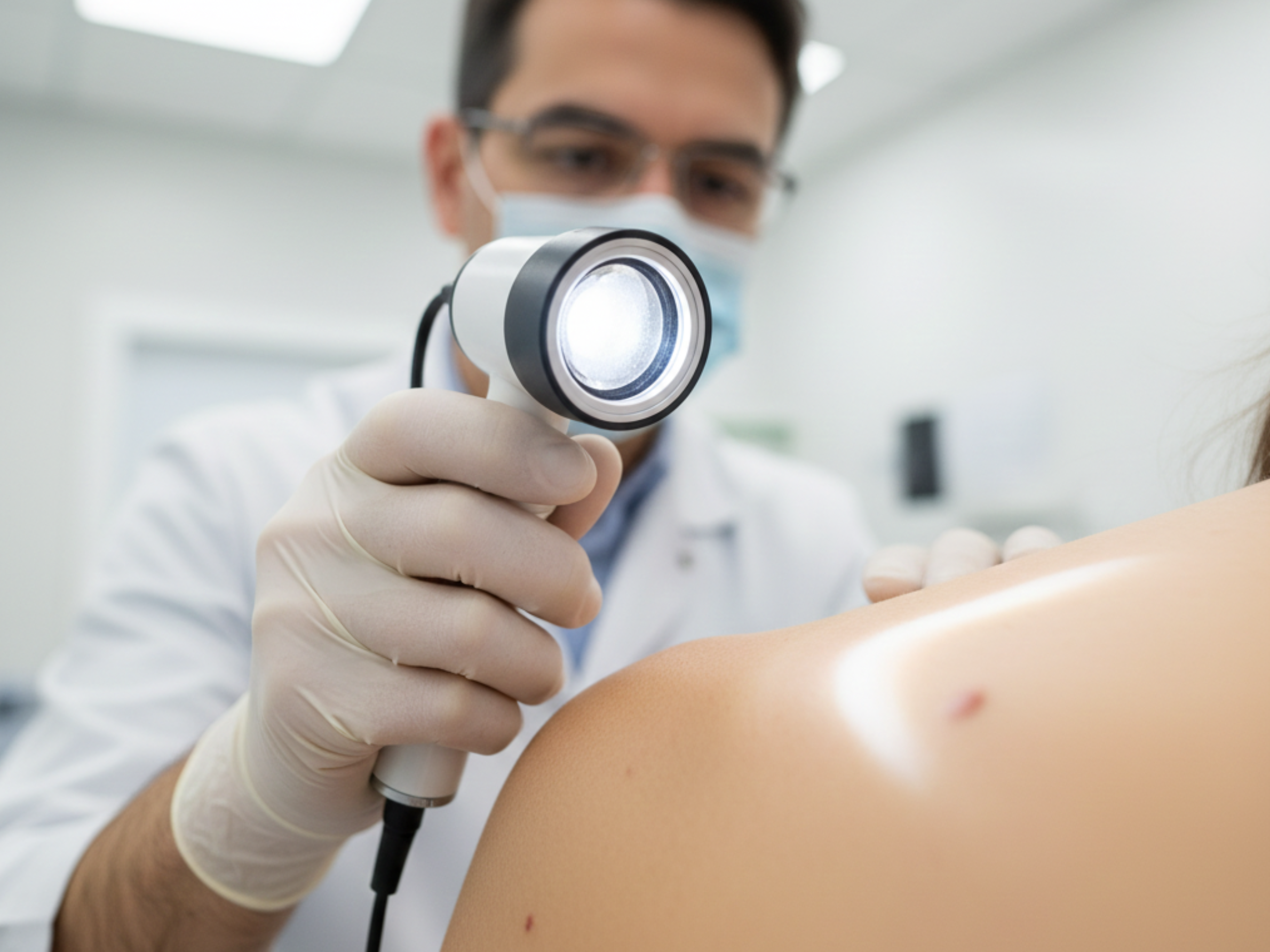
Why Is an Early Melanoma Check Important?
A professional melanoma check can help assess suspicious moles, new spots and changes in the skin. Early assessment is particularly important because melanoma can sometimes develop without causing pain or other obvious symptoms.
Watch for changes such as:
- Asymmetry: One half of a mole looks different from the other.
- Border changes: The edges appear irregular or uneven.
- Colour changes: A spot develops different shades or an uneven colour.
- Diameter: A spot grows larger, although melanoma can also be small.
- Evolution: A mole or spot changes in size, shape, colour or appearance.
These signs do not automatically mean that a spot is cancerous. However, a new or changing lesion deserves medical assessment, especially if it bleeds, itches or does not heal.
What Happens After Melanoma Treatment?
Follow-up care helps doctors monitor recovery and identify possible recurrence or new skin cancers. The schedule depends on the melanoma stage, the treatment received and individual risk factors.
Your healthcare team may recommend regular skin examinations, checks of nearby lymph nodes and additional tests when necessary. You should also become familiar with your skin and report any new or unusual changes.
Protecting your skin from ultraviolet (UV) radiation is another important step. Use broad-spectrum sunscreen, wear protective clothing, seek shade and avoid tanning beds.
Frequently Asked Questions
1. What is the main treatment for melanoma?
Surgery is the main treatment for most early-stage melanomas. More advanced cases may require immunotherapy, targeted therapy, radiation therapy or a combination of treatments.
2. Can melanoma be treated if it spreads?
Yes. Treatment options may include immunotherapy, targeted medicines, radiation therapy and selected surgical procedures. The most suitable approach depends on where the melanoma has spread and the patient’s health.
3. Is a melanoma check painful?
A routine skin examination is generally painless. If a doctor identifies a suspicious spot, they may recommend a biopsy, which usually involves local anaesthesia.
4. How often should I have a skin check?
The recommended frequency depends on your medical history, risk factors and previous skin cancer diagnoses. Ask your healthcare professional to recommend a suitable schedule.
5. Can melanoma return after treatment?
Yes, melanoma can recur after treatment, and patients may also develop a new melanoma. Regular follow-up and monitoring for skin changes can help identify concerns early.
Conclusion
Understanding melanoma and its treatment options can help patients take informed steps towards appropriate care. Treatment varies by stage, so timely assessment and advice from qualified healthcare professionals are essential. If you notice a suspicious or changing spot, arrange a medical assessment rather than waiting for it to disappear.
Canberra Skin Cancer Clinic provides skin checks, skin cancer assessments and treatment services in Canberra. Contact the clinic to discuss your skin concerns and arrange an appointment if you need a professional examination.